Canadian Aircraft Carrier - In the field, an undulating field azure and azure, where the wings of a single horseshoe or the wings of a dragon display flowers decorated with a Canadian crown.
HMCS Bonavture was a flagship aircraft carrier, the third and last ship to serve in the Canadian Navy. The aircraft carrier was originally ordered to be built by the Royal Navy during WWII as HMS Powerful. After World War II, construction of the ship was halted and in 1952 work began again, this time on a modified design for the Royal Canadian Navy. This ship entered service in 1957 and was wrecked in Bonavture and participated in NATO naval patrols and naval exercises and participated in the Cuban Missile Crisis until the ship was decommissioned in 1970. Bonavture carried three identification numbers during its career, RML 22, RRSM 22 and CVL 22. After being cancelled, Bonavture was sold for scrap and dispersed in Taiwan.
Canadian Aircraft Carrier
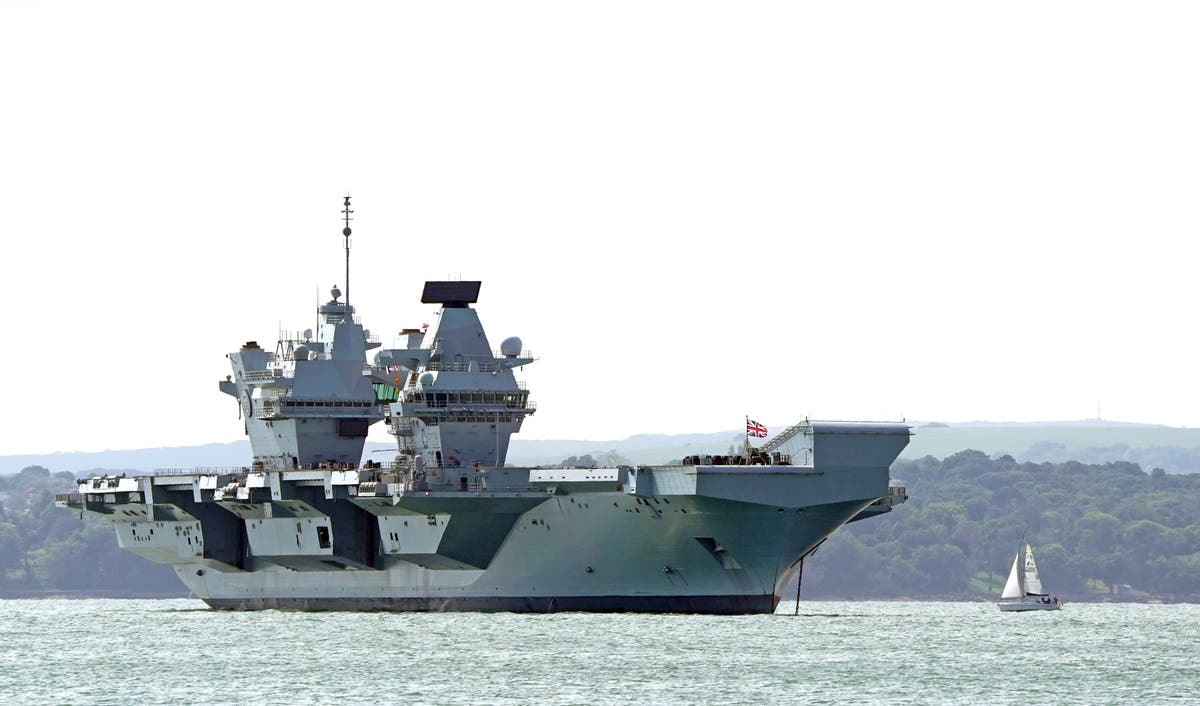
Originally built as HMS Powerful as part of the second batch of the Colossus class during World War II, the ship's construction was halted after the war and the hull was laid up. Mighty was purchased by the Royal Canadian Navy in 1952 and taken to the Harland & Wolff shipyard in Belfast, Northern Ireland, to be converted into a modernized design for the Majestic subclass.
Littoral Combat Ship Archives
The ship had an overall length of 704 feet (214.6 m), a maximum beam of 128 feet (39 m) and a draft of 25 feet (7.6 m). The ship had a standard displacement of 16,000 long tons (16,257 t) and 20,000 long tons (20,321 t) full. Bonavture was powered by two mounted steam turbines driving two shafts driven by steam from four Admiralty 3-drum boilers rated at 40,000 shaft power (30,000 kW).
The aircraft had a top speed of 24.5 knots (45.4 km/h; 28.2 mph) and carried 3,200 long tons (3,251 t) of fuel oil.
There were 1,370 officers and crew on board. Shields were placed over the magazines for additional protection. The carrier was armed with four twin 3-inch (76 mm)/50 caliber Mk 33 guns and four 3-pound (1.4 kg) guns.
The Bonavture had a different appearance than her sister ships, as she had a longer mast, a raked hopper, and a larger 3-inch gun mount.
Crew Of Hmcs Bonaventure Commemorate Their 10,000th Successful Landing. Hmcs Bonaventure Was Commissioned On January 17th, 1957. She Was The First Aircraft Carrier To Be Owned Outright By Canada And Incorporated Several
Adding to its unique appearance was that the Bonavture was equipped with US Navy radar, specifically the SPS-8A high altitude radar and the SPS-12 air search radar.
As part of the updated design, Bonavture is equipped with three new aeronautical technologies. The Majestic's low-profile design allowed for the launch and recovery of heavy aircraft landing at 87 knots (161 km/h; 100 mph) up to 20,000 pounds (9,100 kg).
Bonavture was good to the limit and was able to land an aircraft up to 24,000 pounds (11,000 kg). Aircraft lifts were extended to 54 by 34 feet (16 m × 10 m) to accommodate larger aircraft.
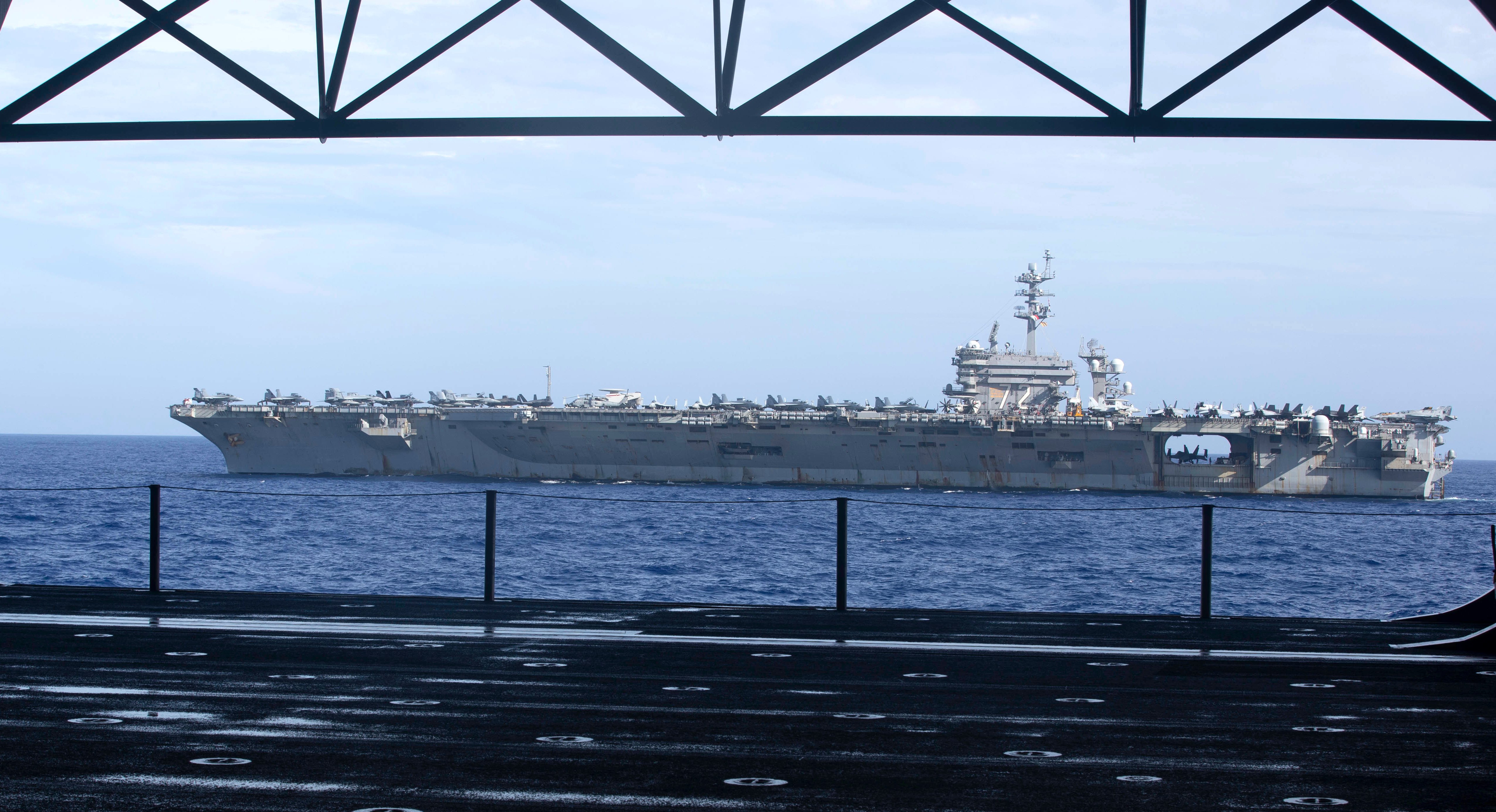
An angled flight increased the carrier's landing area without limiting the parking area of the aircraft and allowed the removal of the previous obstacles to accidents.
Hms Prince Of Wales Warship Grinds To A Halt Over 'failure To Grease Propeller Shaft'
The Bonavture carried five ships during its service life. The first aircraft carrier group consisted of six McDonnell F2H Banshee jet fighters and eight Grumman CS2F Tracker anti-submarine warfare (ASW) aircraft.
The Banshee was flown by VF 870 and VF 871, and the Tracker by VS 880 and VS 881, along with Sikorsky HO4S ASW helicopters operated by HS 50 of Bonavture.
Despite this, Bonavture carried out day and night operations, carrying four Trackers and two HO4S at a time while monitoring an area of 200 nautical miles (690 km).
Banshees was retired in 1962, but not replaced. The ship's role changed to pure ASW and the air wing was replaced, the fighters were shot down, but eight riders were released and the number of HO4S increased to four.
N Tu932 064 Pacific Ocean (aug. 1, 2016) Royal Canadian Navy Halifax Class Frigate Hmcs Calgary (ff 335) Steams Alongside Nimitz Class Aircraft Carrier Uss John C. Stennis (cvn 74) During Rim Of The Pacific 2016
In 1963, the carrier began repairs to allow it to operate new Sikorsky CHSS-2 Sea King helicopters ordered to replace the HO4S.
Two aircraft carriers were built during WWII, Magnificent and Powerful, both of which would remain in Canadian service after the war.
The British government ordered the construction of a second ship, which would become the Majestic class, on 16 October 1942, when cargo was placed at the Harland & Wolff shipyard in Belfast, Northern Ireland. On 21 November 1943, ship number 1229, the aircraft carrier's keel was lowered to the skid, and the British Royal Navy named the ship Power. Strong was launched on 27 February 1945. After the Second World War, work was stopped in May 1946 and the hull remained incomplete in Belfast.

On April 23, the Canadian government approved $21 million to acquire Powerful. A Hermes-class cruiser was also offered to the Royal Canadian Navy by the United Kingdom, but it found it too expensive, and two Essex-class cruisers borrowed from the US Navy were used. found it expensive. The strong selection was due to price considerations as well as financial support from the UK.
Pacific Ocean (oct. 25, 2014) The Aircraft Carrier Uss Nimitz (cvn 68) Transits The Pacific Ocean. Nimitz, Along With Canadian, Japanese And Other U.s. Ships Are Underway Conducting A Task Group Exercise (
Intensive work began again, this time with a modernized design that included enhanced carrier operations such as an angled flight deck and steam catapults.
Other modifications included American radar and guns. Construction was completed on January 17, 1957, and the ship was named after Captain H.V. General command. The ship was commissioned by the wife of Canadian Defense Minister Ralph Campney.
Bonavture, named after St. Named after Bonavture Island, a bird sanctuary in Lawrence Bay, it was the first ship to become fully Canadian.
In March 1957, the carrier tested its aircraft over the English Channel. The Bonavture departed for Canada on June 19 and arrived at its home port of Halifax, Nova Scotia on June 26, carrying the experimental hydrofoil Bras d'Or to Canada on the flight deck.
The Canadian Aircraft Carrier Hmcs Magnificent (cvl 21) In Boston, 1951. [1007x800]
In October, the carrier began new trials in the Caribbean Sea with an air group consisting of VF 870 (Banshee), VS 881 (Tracker) and an HO4S helicopter, which lasted until early 1958. This included operations of the Royal Navy. aircraft carrier HMS Bulwark.
On October 2, a Banshee fighter jet en route from Bonaventure to the naval base of HMCS Shearwater went missing at sea. The search resulted in the disappearance of the plane and the pilot.
On February 25, 1958, the Banshee crashed into the ocean after takeoff, killing the pilot. On March 4, the Banshee was involved in another fatal accident, when the plane landed normally on the deck, a brake failure caused the fighter to roll onto the port side of the ship, killing the pilot. .

During Sharp Squall IV, the Banshee was lost in the bow of the ship as it sank. This time, the pilot was rescued by the destroyer HMCS Athabaskan.
Us Navy May Dismantle Uss Enterprise (cvn 65), The Service's First Nuclear Powered Aircraft Carrier, At Commercial Yard
In November 1958, while operating on Newfoundland's Grand Bank, Bonavture and his crew came into contact with a Soviet Navy submarine patrolling a group of Russian fishing boats.
The aircraft carrier closed the year with a visit to the United Kingdom before undergoing repairs in Saint John, New Brunswick.
In 1960, NATO reformed the defense of the North Atlantic and Canada's contribution to the new plan centered on the ASW strike group led by Bonavture.
The carrier rejoined the squadron in November 1960, following the VF 870 (Banshee), VS 880 (Tracker) and HS 50 (HO4S). Bonavture participated in naval exercise Toput Droit beginning in February 1961, followed by a training period with the US Atlantic Fleet in the summer and more naval exercises in October.
During A 2013 War Game, A Sub Sank A U.s. Aircraft Carrier
On September 30, 1962, Canada withdrew its Banshee fleet and Bonavture's mission was changed to a preventive war against the enemy.
Bonavture and the 1st Canadian Escort Squadron were sailing in UK waters when the Cuban Missile Crisis began on 13 October 1962. Bonavture and his escort were recalled to Canada as the crisis worsened.
The ship returned to its home port after the crisis and began repairs in Saint John in January 1963. During the refit, the ship was converted to operate Sea King helicopters. The cargo rejoined the group in May, but suffered a thermal blast while in Halifax harbour. The renovation took six weeks to complete.

That year Bonavture participated in the Sharp Squall naval exercise, and in September, took part in testing the ASW defense in the Greenland-Iceland gap. This was followed by operations between HNLMS Karel Doorman.
Majestic Class Aircraft Carrier
1964 Navy estimates required a major overhaul of the Bonavture to extend the carrier's service life.
As the Canadian Maritime Commission plans the next maintenance of the aircraft carrier, Bonavture participated in the Gooey Duck sea exercise, which included training in Bermuda in January and sailing to the Mediterranean in February. While Bonavture was there, he was recalled to Canada to send troops from Canada.
Lexington aircraft carrier, canadian carrier, canadian navy aircraft carrier, aircraft carrier museum ships, army aircraft carrier, aircraft carrier san diego, canadian aircraft, new canadian aircraft carrier, midway aircraft carrier, future canadian aircraft carrier, lego navy aircraft carrier, aircraft carrier

0 Comments