Canada Aircraft Registry - Table 1 Table Summary This table presents the results of Table 1. Information is grouped by Tier 1 carriers (displayed as row headings), Airbus, Boeing, Bombardier, de Havilland, Embraer and Total (displayed as column headings).
Table 2 Table Summary This table shows the results of Table 2. Information is grouped by Manufacturer (displayed as row headings) and Count (displayed as column headings).
Canada Aircraft Registry

Table 3 Table Summary This table shows the results of Table 3. The information is grouped by Manufacturer (displayed as row headings) and Count (displayed as column headings).
Aircraft Registration & Transactions
Table 4 Table Summary This table shows the results of Table 4. Information is grouped by country (displayed as row headings) and number (displayed as column headings).
The flight registration statistics in this infographic only include valid registrations, so exclude canceled and expired registrations.
The term "aircraft" is synonymous with the Transport Canada term "aircraft" and will be used throughout the infographic for simplicity.
Canada owes the success of its statistical system to a long-standing partnership between Statistics Canada, Canadian citizens, its businesses, governments and other organizations. Accurate and timely statistics could not have been produced without their continued cooperation and goodwill.
Aircraft Operating & Ownership Options
Statistics Canada is committed to serving its customers promptly, reliably and courteously. To that end, the organization has developed service standards that employees follow in serving their customers. Van's plane shows RV-7 registration G-KELS. The G prefix indicates a civil aircraft registered in the UK.
An aircraft registration is a code that is unique to an aircraft and is required by international convention to be marked on the outside of all civil aircraft. The registration indicates the country of registration of the aircraft and works like a car number plate or ship registration. This code should also appear on the certificate of registration issued by the relevant Civil Aviation Authority (CAA). An aircraft can only have one registration per jurisdiction and this can be changed during the life of the aircraft.
According to the International Convention on Civil Aviation (also known as the Chicago Convention), all civil aircraft must be registered with the Civil Aviation Authority (CAA) using procedures established by each country. All countries that are not parties to the Chicago Convention have an NAA
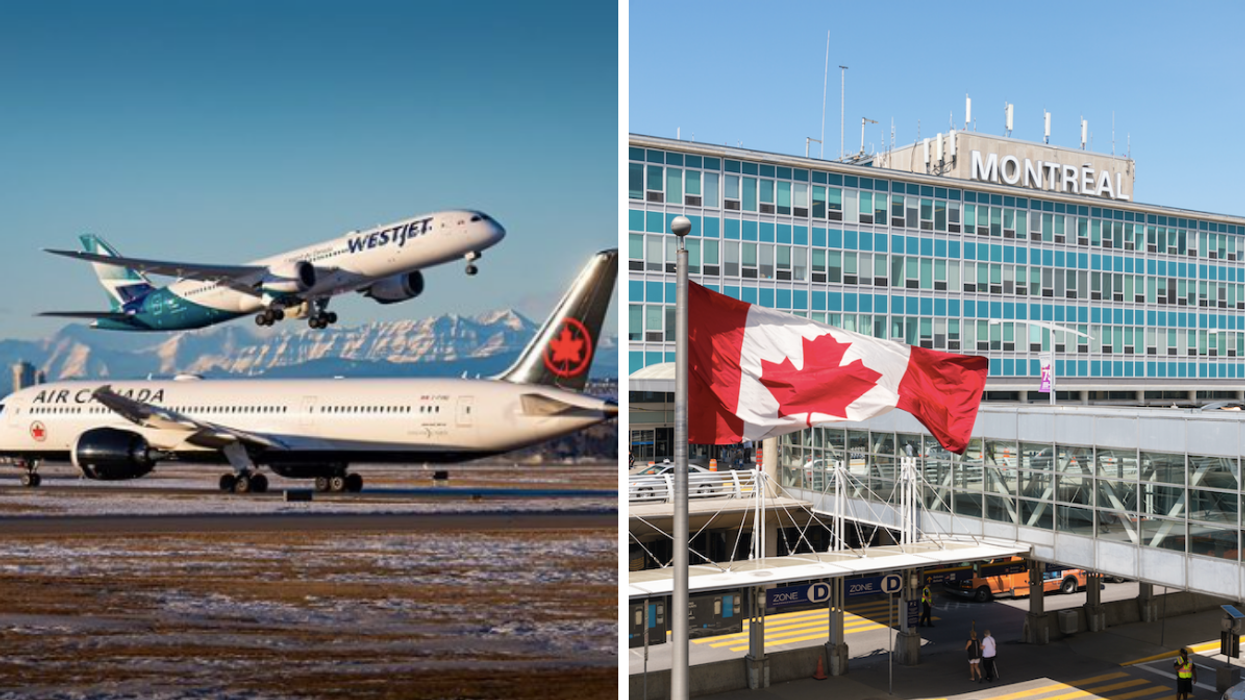
Which includes the registration of civil aircraft. An aircraft can only be registered once, in one jurisdiction, at a time. The NAA allows a unique alphanumeric string to identify the aircraft, which also indicates the nationality (ie country of registry
Canada Is Getting A Brand New Airline & It's An 'all Canadian Airline That Is All About Value'
) of the aircraft and provides a legal document called a certificate of registration, one of the documents required when the aircraft is in service.
In the case of a post-fire/crash accident investigation, most countries require the registration ID to be stamped on a permanent fireproof plate attached to the fuselage.
Military aircraft are often not assigned civil registration codes. However, non-military civilian aircraft (for example US Department of Homeland Security aircraft) are issued a civilian registration.
Although each aircraft registration ID is unique, some countries allow it to be reused when the aircraft is sold, destroyed or retired. For example, N3794N is assigned to Mooney M20F.
Photo Of Learjet 45 (c Gfft)
It used to be assigned to the Beechcraft bonanza (specifically the plane that killed Buddy Holly). An individual aircraft may be assigned different registrations during its existence. This may be due to changes in aircraft ownership, jurisdiction of registration or in some cases vanity reasons.
Aircraft are often registered in the jurisdiction where the operator resides or is based and may enjoy priority or privilege as a flagship for international operations.
Airlines in emerging markets may need to register aircraft in offshore jurisdictions where they lease or purchase aircraft but are financed by banks in major onshore financial centres. The sponsor may be reluctant to register the aircraft in the operator's home country (either because it lacks adequate civil aviation regulations or because it believes that the courts of that country will not be fully operational if there is an urgent need for security interests in relation to the aircraft), and for personal or political reasons, for fear of wrongdoing and possible arrests. , the operator is reluctant to register the aircraft in the jurisdiction of the financier (US or UK). the plane

The first use of aircraft registrations was based on the radio callsigns given at the International Meteorological Conference in London in 1913. The format was a prefix of one letter followed by four other letters (such as A-BCDE).
How The Iconic De Havilland Beaver Bush Plane Opened Northern Ontario To The World
A single letter prefix is assigned to the major countries that operate the aircraft. Smaller countries had to share a single letter prefix, but allowed exclusive rights to the first letter of the suffix.
It was revised with the agreement of the International Bureau at Bern and published on 23 April 1913. The International Convention on Air Navigation (1919 Paris Convention) was held in Paris in 1919, although the initial allocation was not specifically for aircraft but for any radio user. Allocation specifically for aircraft registration based on the 1913 call sign list. The agreement stipulated that national symbols should be followed by a hyphen, a group of four letters that must also contain a vowel (and Y was considered a vowel). This system worked until the reformation system was introduced in 1928.
The International Radiotelephone Conference held in Washington in 1927 revised the list of designations. These have been adopted since 1928 and form the basis of the registrations in use today. The designations have been modified and added to over the years and since 1947 the allocation and standards have been managed by the International Civil Aviation Organization (ICAO).
Article 20 of the Convention on International Civil Aviation (Chicago Convention), signed in 1944, requires all aircraft engaged in international air navigation to bear appropriate nationality and registration marks. Once the necessary procedures are completed, the aircraft will receive its unique "registration" which must be clearly displayed on the aircraft.
Canadian Registration Tail Numbers Arriving At Dfw International Editorial Photography
Annex 7 of the Chicago Convention describes the definitions, location and scope of nationality and registration marks. An aircraft registration consists of a prefix (which makes it a quick way to determine the country of origin of the registration) and a registration suffix selected from the country's callsign prefix provided by the International Telecommunication Union (ITU). Depending on the country of registration, this suffix is a numeric or alphanumeric code consisting of one to five characters. The Appendix to Annex 7 provides an updated list of recognized national and generic marks used by various countries.
The Air France Airbus A318 displays the registration F-GUGJ on the wing base and the last two letters of the registration, GJ, on the nose wheel doors.
The Chicago Convention establishes country-specific prefixes used in registration marks and governs how they are used in international civil aviation and displayed on aircraft, with each country making further provisions for their format and use of registration marks. International flights.

Prefixes and suffixes, painted on the fuselage, are usually separated by a hyphen (for example, YR-BMA). If it is included in the flight plan, the dash is omitted (for example YRBMA). In some countries that use numerical suffixes rather than letters, such as the United States (N), South Korea (HL), and Japan (JA), prefixes and suffixes are joined without a hyphen. Private aircraft typically use their registration as their radio call sign, but many commercial aircraft (especially charter, cargo and airline) use ICAO airline or company call signs.
Air Canada's First Boeing 767 300er Freighter Enters Service; Deployed To British Columbia To Support Canadian Supply Chain
Some countries will allow an aircraft not flying into another country's airspace to display a registration that omits the country prefix - for example, Australian-registered gliders will only display the three-digit distinctive sign without the "VH-". Country prefix.
Some countries also operate a separate registration system, or use a separate class of markings for gliders, ultralights and/or other less common types of aircraft. For example, Germany and Switzerland use letter suffixes (in the form D-xxxx and HB-xxx respectively) for most aircraft, but numbers (D-nnnn and HB-nnn) for powered gliders. Many other countries register gliders in subgroups starting with the letter G, for example Norway with LN-Gxx and New Zealand with ZK-Gxx.
In the United States, the registration number is commonly referred to as the "N" number because all aircraft registered there have a number beginning with the letter N. An alphanumeric system is used because so many aircraft are registered in the United States. . An n-number begins with one or more digits, followed by one or two alphanumeric d, for a total of only one to five characters, and must begin with a digit other than zero. Also, N numbers do not necessarily contain the letters I or O because of their similarities to the numbers 1 and 0.
Each alphabetic character in a suffix can have one of 24 distinct values, while each numeric character can have one of 10, except the first, which can only take one.
Air Canada Is Cancelling More Than 9,500 Flights This Summer. What That Means For Your Travel Plans
Isle of man aircraft registry, aircraft registry canada, canadian aircraft registry search, aircraft registry, transport canada aircraft registry, aircraft registry number, faa registry aircraft, san marino aircraft registry, faa aircraft registry search, transport canada civil aircraft registry, canada civil aircraft registry, aircraft registry search

0 Comments