Pave Low Gunship - The Sikorsky MH-53 Pave Low series is a retired long-range special operations and combat search and rescue (CSAR) helicopter for the United States Air Force. This series is an upgrade of the Sikorsky CH-53 HH-53B/C flying boat. The HH-53 Super Jolly Gray Giant initially replaced the HH-3E Jolly Gray Giant. The US Air Force MH-53J/M was retired in September 2008.
The U.S. Air Force ordered 72 HH-53B and HH-53C search and rescue units during the Vietnam War, and later developed the MH-53J Pave Low version for special operations missions.
Pave Low Gunship
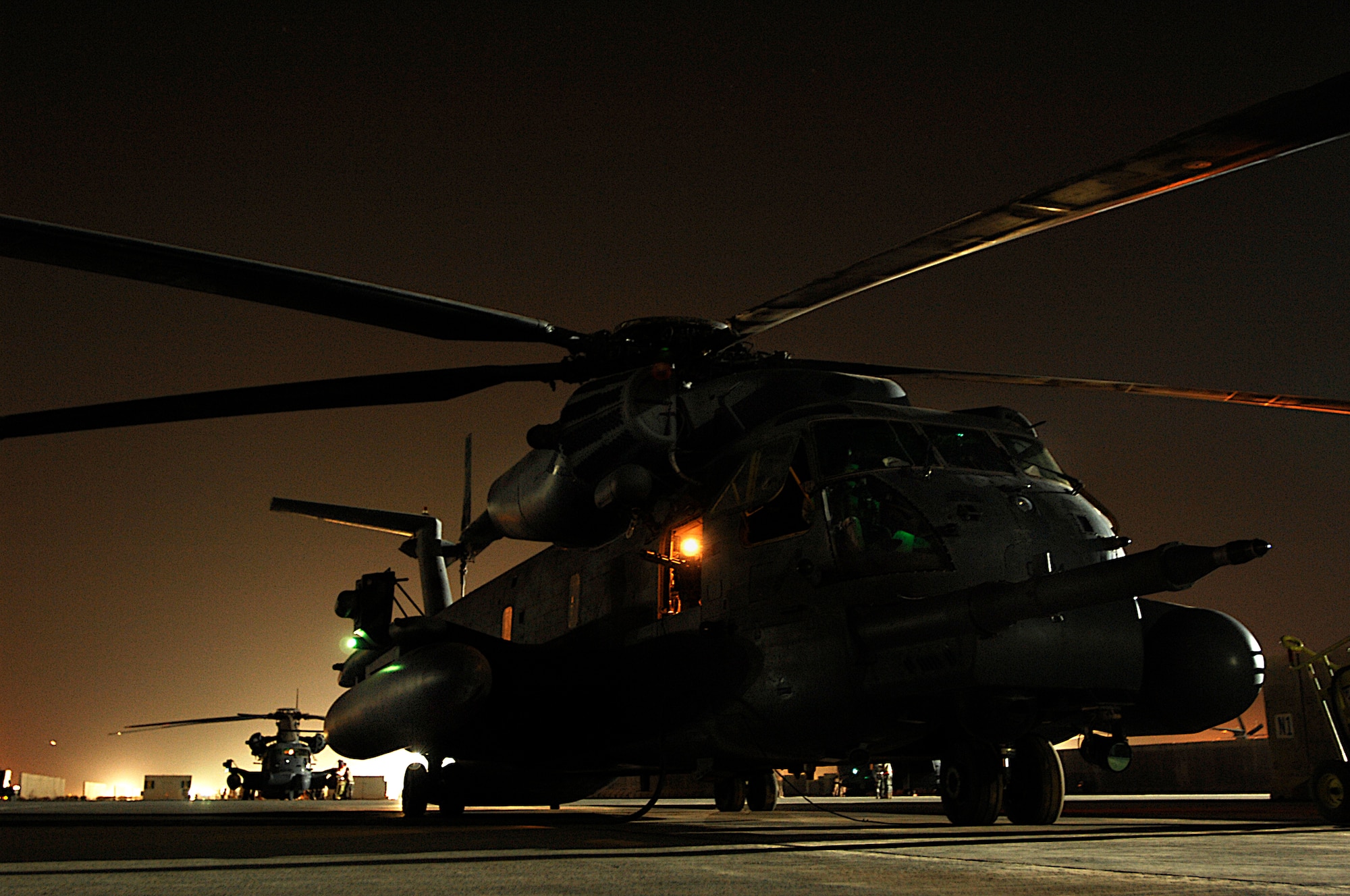
Paw Low's mission is a low area, long range, undetected severe weather mission for Special Operations Forces to infiltrate, infiltrate and recover. Pave Lows often work with the MC-130H Combat Talon for navigation, communications and combat support;
Sikorsky Sh 60 Seahawk
HH-53B's large green airframe was nicknamed the "Super Jolly Gray Giant". The name refers to the HH-3E "Jolly Gray Giant" miniature, an elongated variant of the H-3 Sea King, used for combat search and rescue (CSAR) operations in the Vietnam War.
The US Air Force loves its Sikorsky S-61R/HH-3E "Jolly Gray Giant" long-range CSAR helicopter and is interested in the more capable S-65/CH-53A. In 1966, the USAF commissioned Sikorsky to develop a CSAR version of the CH-53A.
1969-70 HH-53B of 40th Air Rescue and Recovery Squadron from HC-130P Hercules over North Vietnam
Early HH-53Bs were powered by 3,080 horsepower (2,297 kW) T64-GE-3 turbines, but later generations were upgraded to 3,925 horsepower (2,927 kW) T64-GE-7 turbines. . A crew of five was standard, including a pilot, helmsman, captain, and two pilots.
An Air To Air Left Side View Of An Mh 60g Pave Hawk Helicopter Over The Beach Near Eglin Air Force Base. The Helicopter Is Undergoing Testing For Use By The 55th Special Operations Squadron
The HH-53B was largely an interim model and production quickly transitioned to the slightly improved Air Force HH-53C CSAR model. The most obvious difference between the HH-53B and HH-53C is that the HH-53C has flared fuel tank brackets. Experience with the HH-53B showed that the original fuel tank was too large and adversely affected full-throttle performance, so a smaller 450 US gal (1,703 L) fuel tank was used. Other changes include more armor and more understandable serial radios to improve communications with C-130 tanks, attack aircraft supporting CSAR operations, and crew standing by for ground rescue. HH-53C was otherwise similar to HH-53B, with a more potent T64-GE-7 gene.
A total of 44 HH-53Cs were built and entered service in August 1968. By the end of the war they were equipped with anti-aircraft missiles to cope with heat-seeking missiles. Like the HH-53B, the HH-53C is also used for covert operations and interception of reconnaissance pods, as well as reconnaissance drones. A small number of people were assigned to support the Apollo space program and remained to recover the Apollo capsule in the event of a launch pad crash, though that accolade was never enjoyed.
In addition to the HH-53C, the Air Force acquired 20 CH-53C helicopters for additional German transport work. The CH-53C is very similar in appearance to the HH-53C, with the main difference being that the CH-53C does not have an in-flight refueling probe. Because the CH-53Cs are used for covert operations, they are as armed and armored as the HH-53C.
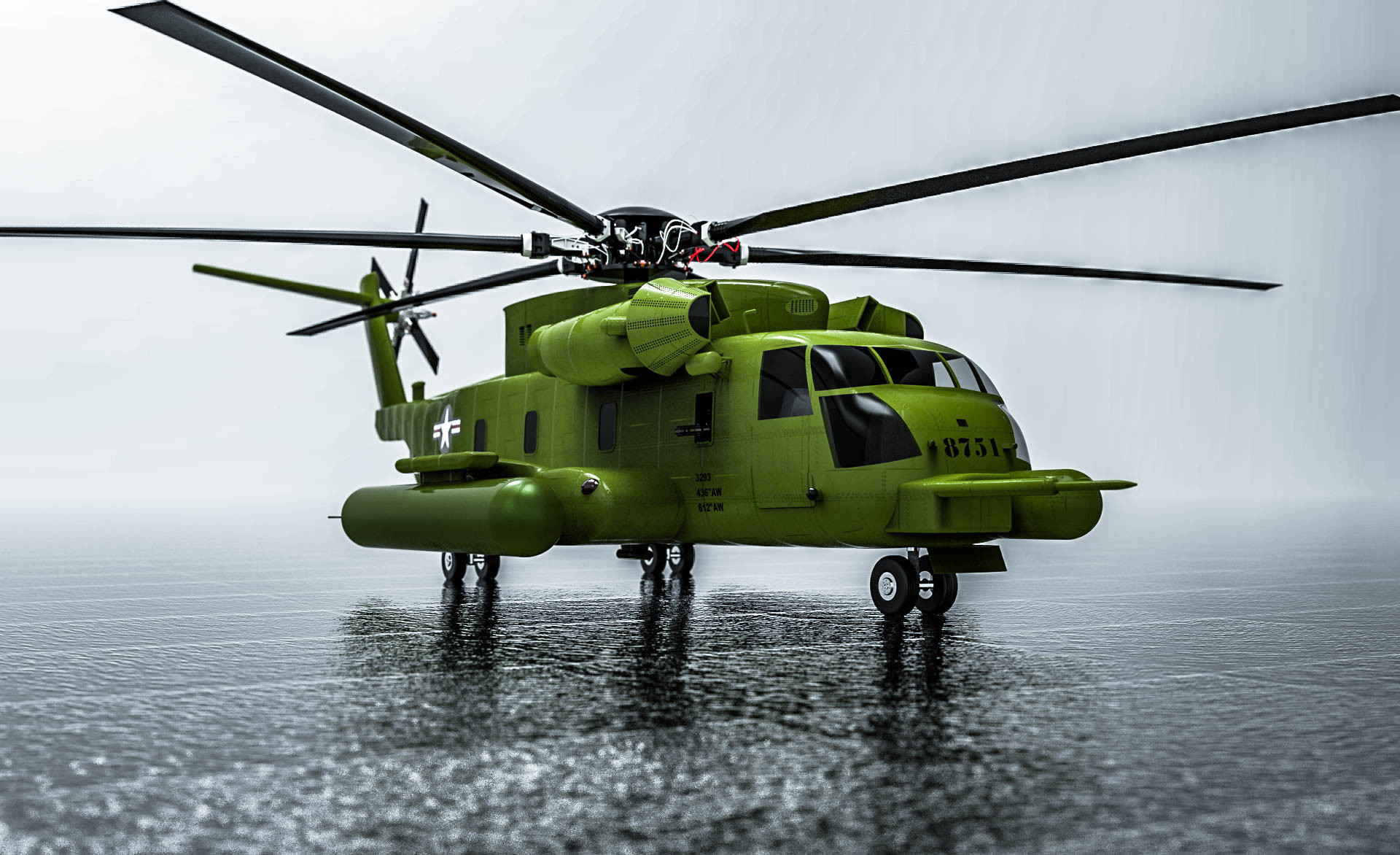
PAVE or Pave is the Air Force codename for several weapon systems that use advanced electronics.
Rescuing Karzai, America's Elite Special Operations Aviators In Action
USAF Super Jollies were serviceable helicopters, but they were day/fair weather vehicles and dismounted crews were often in trouble at night or in bad weather. A limited night/bad weather surveillance system based on Low Level Television (LLLTV) imagery designated "Pave Low I" was deployed to Southeast Asia in 1969 and combat-evaluated on the Super Jolly, but its reliability was insufficient.
In 1975, the HH-53B was given a more advanced "Pave Low II" system and was redesignated the YHH-53H. This maneuver proved more satisfactory, so eight HH-53Cs were fitted with more advanced systems and renamed the HH-53H Pave Low III, and the YHH-53H was also upgraded to this standard. All were delivered in 1979 and 1980.
The HH-53H retains the fuel tank, external fuel tank, bailout hoist, and three gun mounts from the HH-53C. Armament is usually a minigun on each side, with a Brown .50 mil (12.7 mm) cannon in the rear, providing increased range and anti-light armour. The characteristics of the HH-53H:
FLIR and TFR are mounted on their own "jaw" mounts. The HH-53H can be equipped with 27 seats or 14 litters. The update was done by the Navy and reflects the Navy's handling of the Air Force S-65's advanced fuselage. In 1986, surviving HH-53Hs were upgraded to the CONSTANT GRE program, with staged improvements such as cockpits featuring blue-green lights paired with night vision goggles (NVG). They were classified as "Special Operations" vehicles and accordingly redesignated MH-53H.
Mh 53 Pave Low śmigłowce Dla Sił Specjalnych
The HH-53H proved itself, the Air Force decided to order more, and the MH-53J Pave Low III introduced a modified configuration. The general configuration of the MH-53J is similar to that of the HH-53J, with the main changes being the addition of two T64-GE-415 twin-engined engines, 4,380 shp (3,265 kW) each, as well as more armor, with a total armor weight of 1,000 pounds (450 kg). There are also some avionics upgrades, including a modern Global Positioning System (GPS) satellite navigation receiver. Between 1986 and 1990, a total of 31 HH-53Bs, HH-53Cs and CH-53Cs were upgraded to the MH-53J configuration, and all MH-53Hs were upgraded, for a total of 41 MH-53Js.
An MH-53J Pave Low IIIE of the 551st Special Operations Wing, 58th Special Operations Wing conducts a training mission
An MH-53M Pave Low IV of the 21st Special Operations Group approaches the refueling basket of an MC-130P Fighter Shadow for in-flight refueling during the 2000 Mozambique floods.
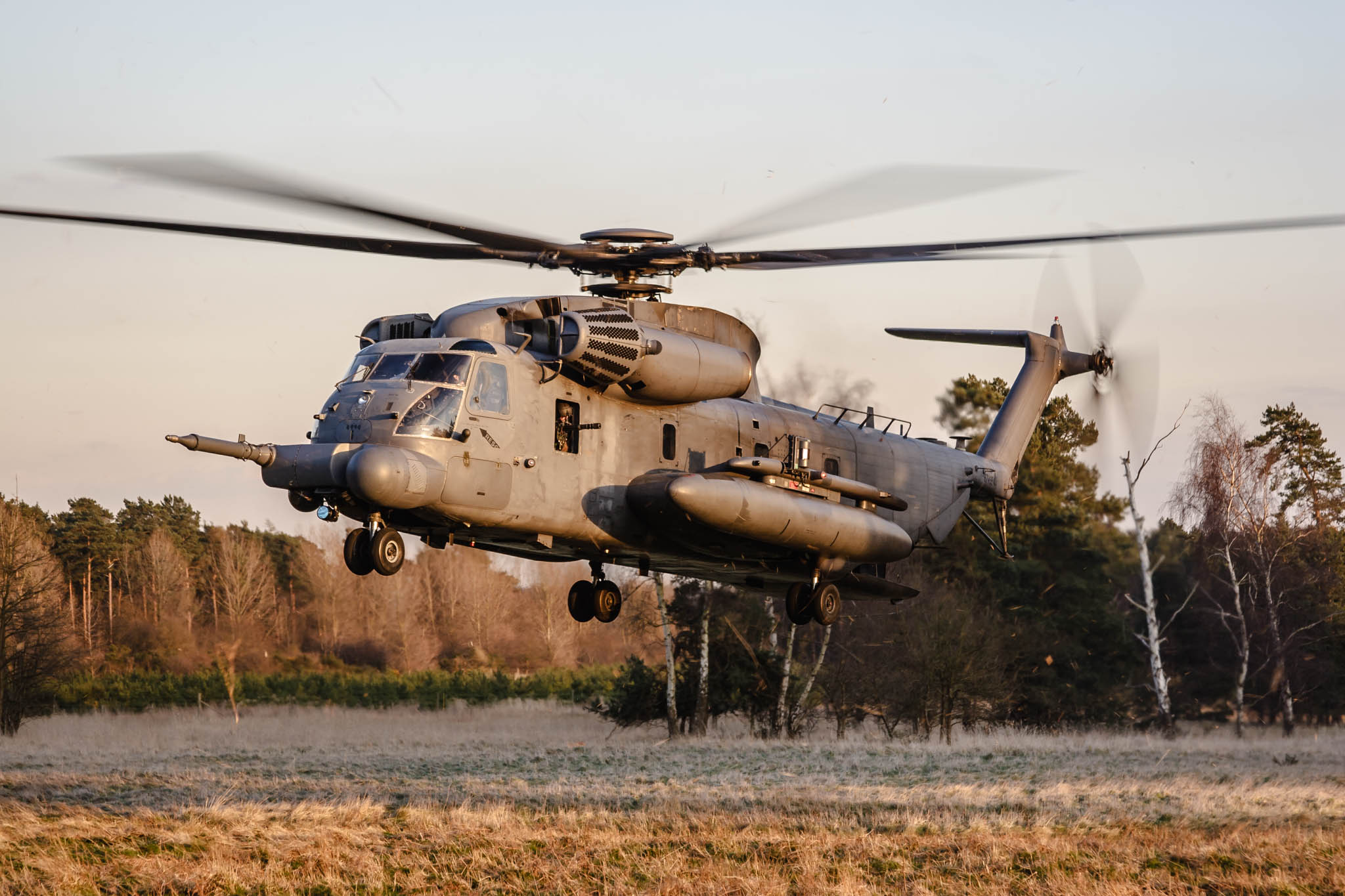
The MH-53J Pave Low III helicopter was the largest, most powerful and most technologically advanced attack helicopter in the United States Air Force. Ground-following and ground-avoiding radar, forward-facing infrared radar, inertial navigation system with global positioning system, along with the projected map display, allow the crew to follow the terrain and avoid obstacles to achieve low-level maneuverability.
Sikorsky Mh 53 Pave Low Helicopter Papercraft (transformers)
Under the Pave Low III program, the Air Force modified nine MH-53Hs and 32 HH-53s for night operations and severe weather conditions. Modifications to the AN/AAQ-18 include forward-facing infrared, inertial navigation system, global positioning system, Doppler navigation system, APQ-158 ground and surface protection radar, on-board mission computer, suspended navigation and integrated avionics. is able to accurately navigate to and from target areas. The Air Force designated this modified version as the MH-53J.
The MH-53J's primary mission is to drop, resupply and recover special forces behind emy lines. It can also perform combat search and rescue missions. Low-level appeal was achieved by an advanced terrain-following radar, as well as an infrared beam which enabled the helicopter to operate in adverse weather conditions. It is equipped with a breastplate. It could carry 38 soldiers at a time and haul 20,000 pounds (9,000 kg) of cargo with external hooks. It had a top speed of 165 mph (266 km/h) and a ceiling of 16,000 feet (4,900 m).
MH-53M Pave Low IV from MH-53J configuration plus Multi-Mission Advanced Tactical Terminal/Interactive Defense Air System or IDAS/MATT. This system reduced Pave Low's faulty performance. Provides instant access to battlefield overviews through real-time electronic orders of battle updates. It also provides new detection protection with real-time threat broadcasts over the horizon, so employees can avoid and miss threats and fall back when needed.
Pending delivery of the HH-53Bs, the Air Force has acquired two Navy CH-53As for evaluation and training. The first of eight HH-53Bs made its maiden flight on 15 March 1967, and until this year the type served CSAR missions with the USAF Aerospace Rescue and Recovery Service in Southeast Asia. The Air Force called the HH-53B a "super joke". It has been used for CSAR, covert combat operations, and the repeated use of pods from photographic reconnaissance satellites.
Mh 53 Pave Low Blackout By Bagera3005 On Deviantart
The Air Force lost 17 Super Jollies in the Southeast Asian conflict, while losing 14 in combat, including a North Vietnamese MiG-21 shot down 28 January 1970 during a CSAR mission over Laos, three of which were awarded.
In November 1970, Super Jollys starred in the rescue of prisoners of war at the Son Tay prison camp during the failed invasion of North Vietnam, as well as the rescue of the SS Mayaguez from Cambodia's Khmer Rouge fighter jets. May 1975.
The HH-53B, HH-53C, and CH-53C remained in Air Force service through the late 1980s. Frontline Service Super Jollies are painted in a variety of camouflage color schemes, while State Responders are painted in an overall gray scheme with yellow tails.
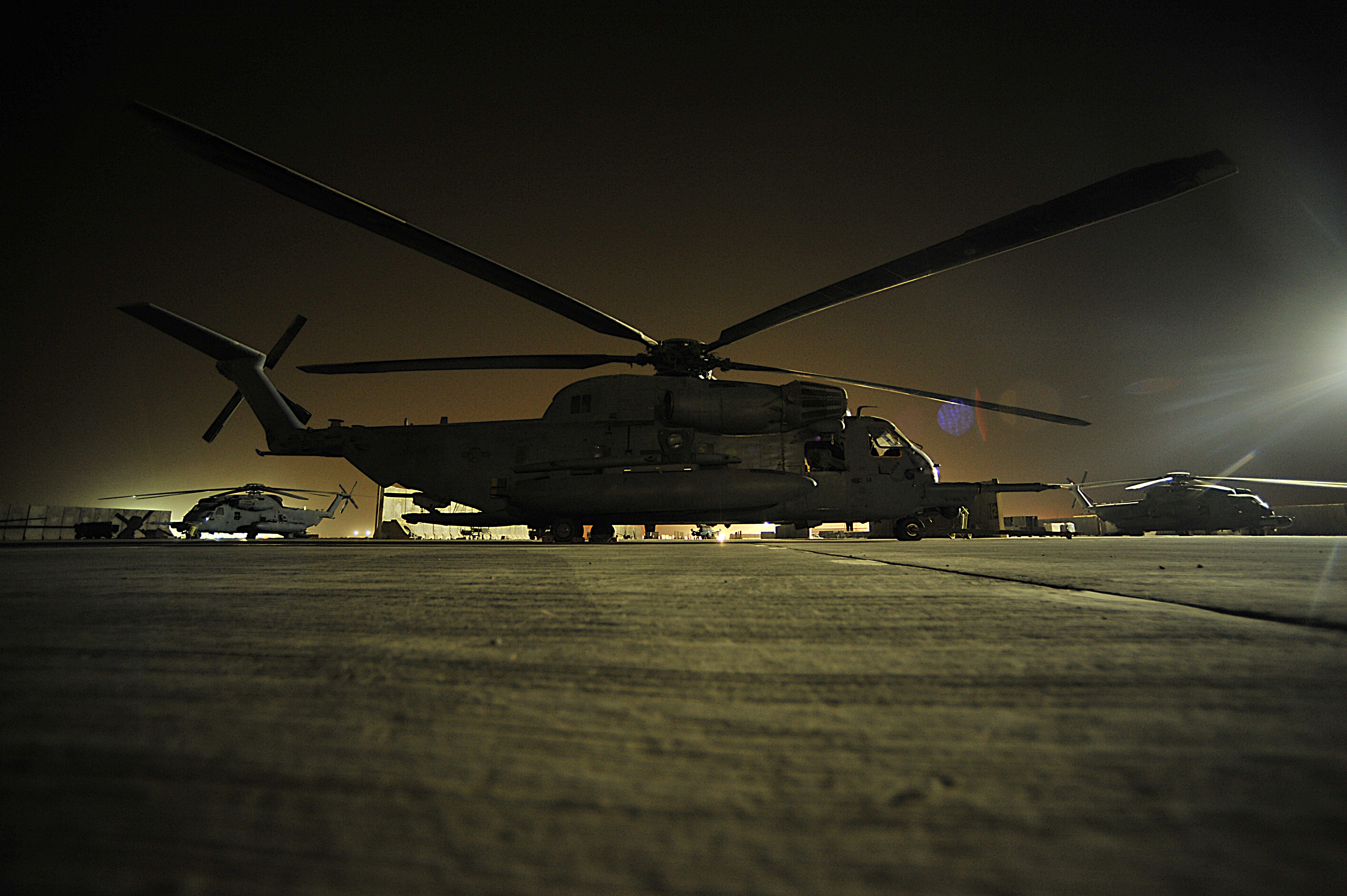
The first nine HH-53H Pave Low entered service on July 1, 1980 and were transferred to
Mh 53s Fly Final Combat Missions > Air Force > Article Display
Pave low model, lego pave low, ch 53 pave low, pave low transformer, mh-53j pave low, rc pave low, hh 53 pave low, pave low, mh 53m pave low, h 53 pave low, mh-53 pave low, pave low helicopters

0 Comments