Glock 19 With Safety Switch - There is a lot of talk about an accessory for Glock pistols called the striker control. It seems any time this product comes online some people want to get out a pitchfork and start a virtual riot. I'd like to think it's due to a simple misunderstanding. So before we look at the actual product, let's talk about why it's there in the first place.
Hear all the details in the video below, or scroll down to read a text article covering the "Glock Gadget."
Glock 19 With Safety Switch
[Note: some of the technical points in today's post might not make all the sense if you're just reading the text version, but if you scroll to 5:14 and watch until 6:18 in the video, you'll see a demo. That should make it clear.]
Glockstore For Aftermarket Glock Parts And Glock Accessories
Before Glock pistols began to gain popularity in the 1980s and 1990s, almost all semi-autos were either single action with a manual safety, double action/single action with a safety or decocker, or both. Glocks have none of these things. They fire strikers with only a trigger, mag release and slide stop.
Today, Glocks and other assault pistols are the norm rather than the exception. Shooters appreciate the simplicity of operating the pistol with fewer controls. They are easier to learn and some would say easier to master as well.
Of course, this simplicity has a drawback. You have a relatively light trigger with a short travel length and no external safety. This means that there are fewer fail-safes in place to prevent unintentional discharge if the shooter has less than ideal gun handling. And let's face it: no matter how well we train, we all make mistakes. I don't know of any shooters who can honestly say they still have perfect muzzle control. It is rare to find a shooter who can honestly say that his finger never drifted off the trigger when it was not supposed to.
So, in addition to the four major gun safety rules that everyone learns, there are a few other best practices that the training community is studying. In particular, there are some procedures we can use when reconfiguring the gun, which often happens when a lot of gun handling errors happen.
The 1 Problem Glock Guns Can't Seem To Shake
Before moving the gun toward the holster, pause to check that your index finger is on the slide or frame and away from the trigger. Clean the holster cover if necessary, and check visually to make sure the holster is free of obstructions. Stand or lean in such a way that the muzzle does not cover the lower body while the gun is in the holster. Then slowly and deliberately, cock the gun back.
These are some great measures to help reduce the risk of bedwetting. Some people (like me) aren't completely satisfied with that. When you have distractions in front of you, whether it's on the range or in the real world, people tend to skip some or all of these steps when reorganizing. So there is one more thing you can do depending on what type of gun you have. With a double-action hammer-fired revolver, you cock the hammer with your thumb. In this way, it is impossible to fire from a revolver, even if there is a finger on the trigger, or a rope or a piece of shirt tail gets caught in the trigger guard.
I really like this practice. After you've been doing it for a while, it quickly becomes ingrained in your muscle memory. In the end, it's just something you do. It will take mental effort to cock the gun without your thumb on the hammer. So even if something crazy happens at the range and you end up being dumb by not looking at the reload speed thing, or maybe it's dark and you can't really see inside your holster well, subconsciously hammer thumb still helps prevent unintended occurrence. Discharge
Unfortunately, you do not have this option with a striker-fired pistol because it does not have a hammer. This is why two really smart guys from Tau Dev Group have developed Striker Control Device. You may know it as "The Gadget".
Why Is The Glock 19 Pistol The Favorite Of The World's Most Elite Forces?
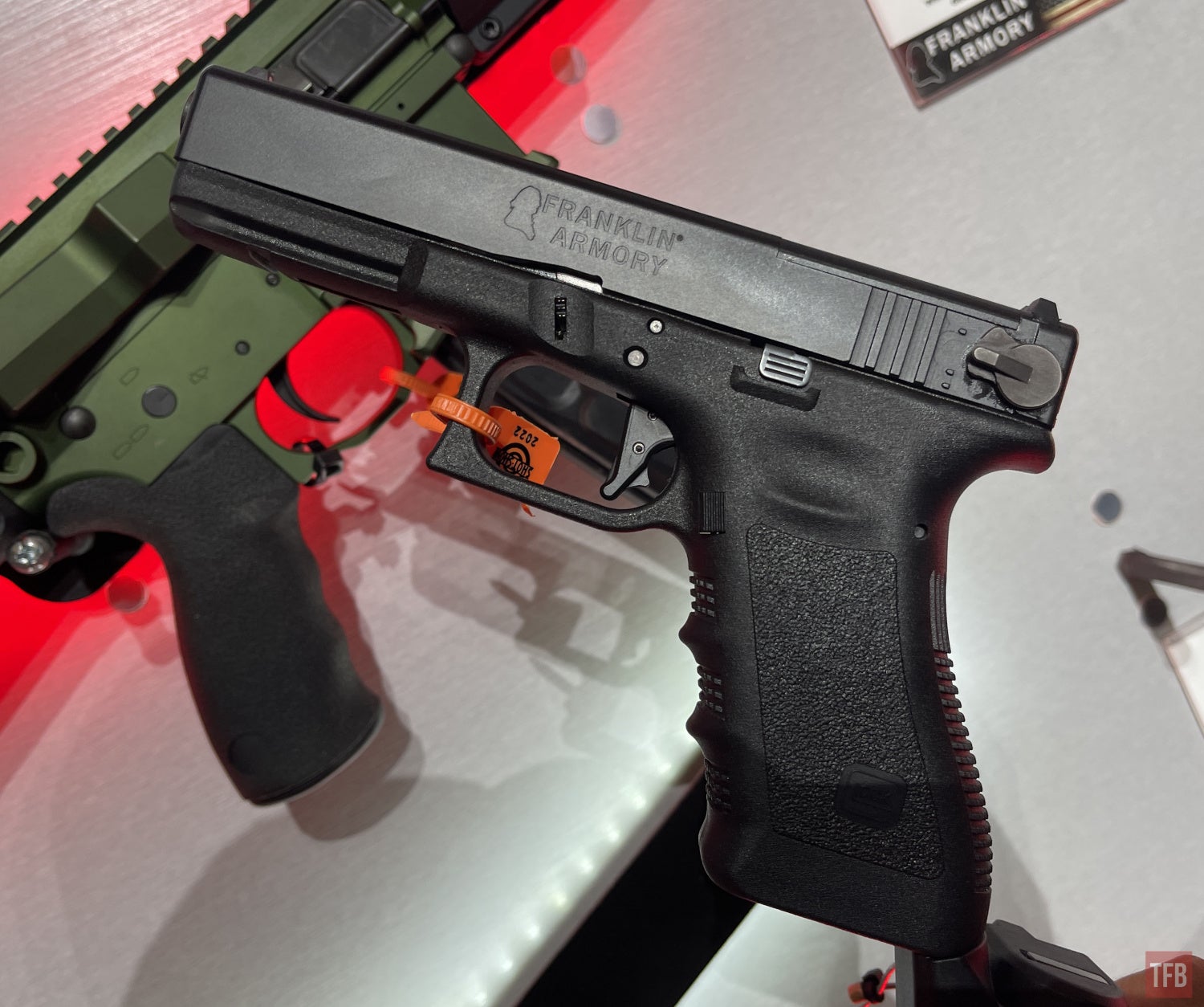
This is a small part on Glock pistols that replaces the slide cover plate at the rear of the slide. When fired normally, it doesn't change anything about how the Glock operates; It's just a sliding cover that tilts out when the trigger is pressed. But if you depress the rear of the slide, it blocks movement behind the striker and trigger. So in that respect, it works just like the hammer on a double-action revolver. If you stick your thumb behind the slide when redeploying, the gun will not fire.
Like I said in the beginning, for some reason the Striker Controller seems to be causing a lot of anger and controversy. I'm not entirely sure why. It is not a mandatory upgrade. It is just an option for those who want to take advantage of an extra layer of security. Some people may be concerned that it will affect the feel of the trigger pull or that it may cause a malfunction.
I haven't had any problems with the ones I've used. But more importantly, I know plenty of dedicated Glock shooters who have put tens of thousands of rounds into their Glocks with striker control hardware installed. Some of them are beta testers who have used this stuff for the past 5 years or more. I am not aware of any serious problem Glock has as a result. I'm sure it's possible, but I think a lot of the reliability concerns are theoretical. It might help ease some people's doubts if they had a better understanding of how this device actually works.
It's a very simple concept. First, let's take a look at how a standard Glock works with all of its factory parts. This is the firing pin assembly. The shooter/striker is partially cocked when in the slide. Then when you depress the trigger, the comb/striker continues to move backwards. When the trigger is finished being depressed, the spring sends the pin forward. I'm going to put this back in the slide and reinstall the factory slide cover plate...
Glock 18c Full Auto Gas Airsoft Pistol Vfc (gen 3
The shooter moves back and forth through this channel in the slide and the slide cover just sits there kind of holding everything in place.
Below the Glock slide and slide cover plate are standard. The firing pin/striker (the silver part near the back of the slide) moves inside the channel when you pull the trigger.
Now that's a chip with a striker controller. It is just a sliding cover with a small piece that extends into the firing channel. Now, if you fire the gun normally, the pin pushes that piece out of the way. There is no spring in the launcher control. It moves freely and does not add any tension that might affect the trigger pull. But if we apply manual pressure on the striker control, it prevents the pin from moving.
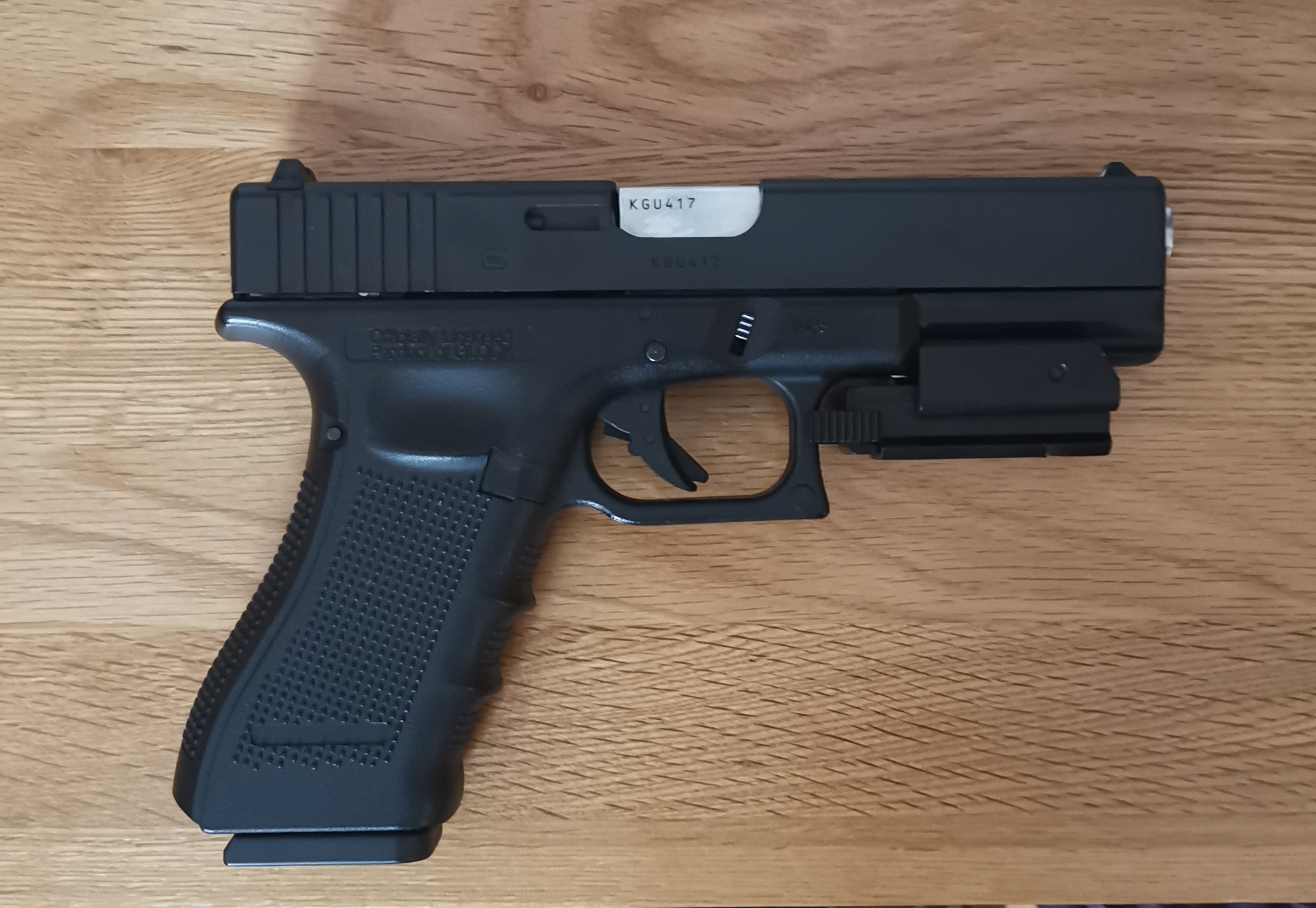
When you install the Striker controller in place of the standard slide cover plate, the movement of the pin causes the trap door-like portion of the SCD to push out from the back of the slide. (Pictured above, this movement is simulated manually with a Glock unloader)
How To Upgrade A Glock Trigger
So there really isn't much. I can see how squeezing the trigger can make it a little gritty if you dunk the gun in a puddle of slime or something. This is not a real concern for most of us.
Many of our readers who know that I am a fan of DA/SA pistols ask me about the choice of a single 9mm or pocket pistol class. Unfortunately, there are many to choose from. I think the next best thing is a Glock 42 or 43 or another compact Glock with a striker control.
Unfortunately, due to the way most other striker-fired pistols are designed, it doesn't look like we'll be seeing hardware similar to the Smith & Wesson M&P, Sig P320, or other striker-fired pistols anytime soon. But they are available for just about any Glock Gen 2 through Gen 5. You can find them on the Tau Dev Group website. The regular price is $89, but it looks like they're on sale right now for $79. I think it is well deserved, and I see no reason to carry a Glock without it. The system provides a stable trigger pull. From the first round to the last. Three automatic, self-acting mechanical safes are included in the pistol's fire control system.
This safe, simple and fast system allows the shooter to focus entirely on shooting without any additional action to release and re-engage the safety. This means they're drop safe, plus they work in temperatures from -40 degrees to 122 degrees Fahrenheit.
Amazon.com: Butane Torch Lighter
Total order
Does a glock 19 have a safety, glock 19 owb holster, does the glock 19 have a safety, glock 19 trigger safety, ankle holster glock 19, glock 19 manual safety, lego glock 19, serpa holster glock 19, chest holster glock 19, glock 19 holster, appendix glock 19 holster, glock 19 iwb holster

0 Comments